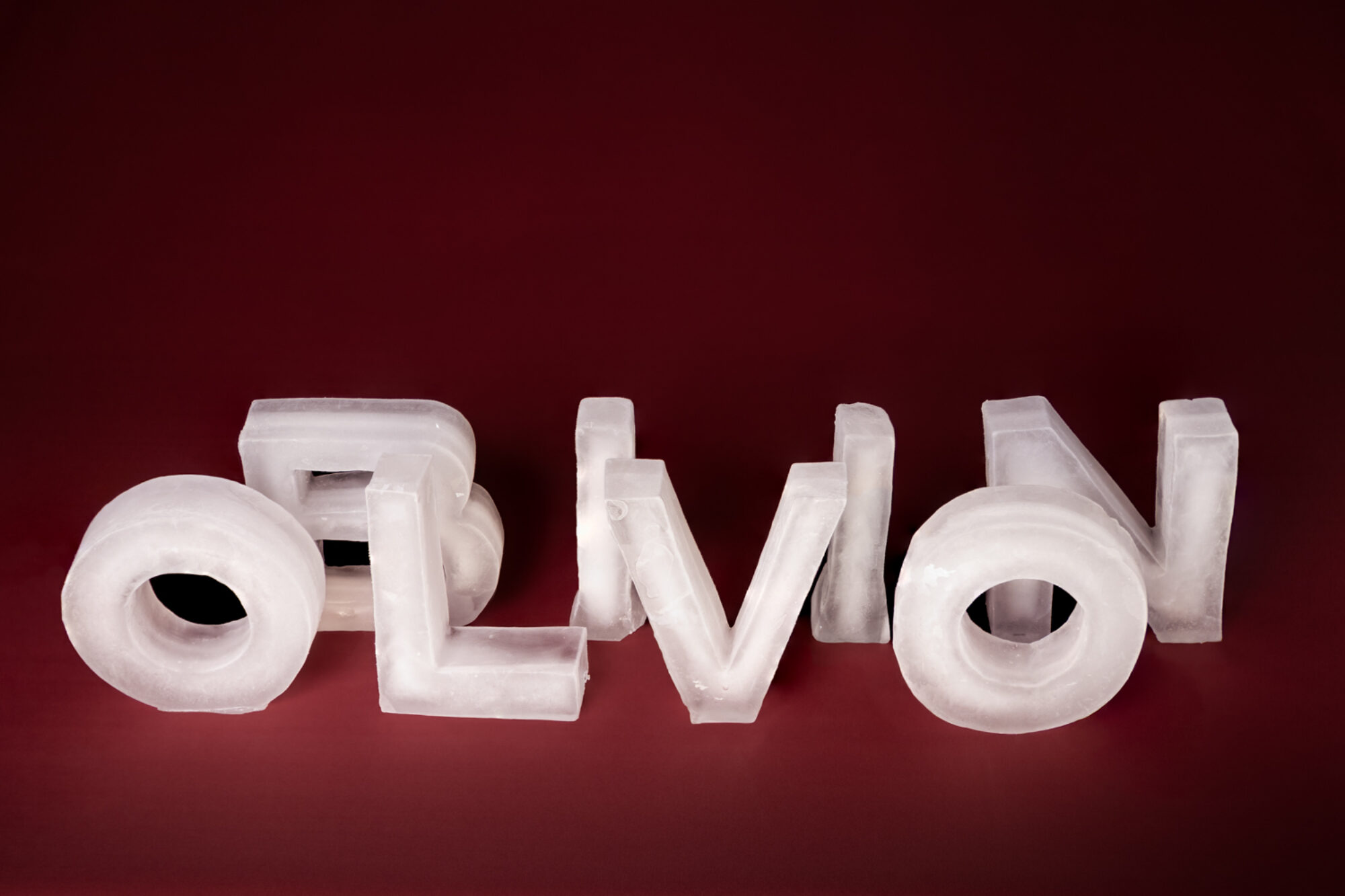
Paola Calcatelli è nata in Piemonte dove vive e lavora. Diplomata all’Accademia di Belle Arti di Torino. Insegnante di Arte. Realizza immagini fotografiche e video in timelapse di piccole installazioni che crea utilizzando i materiali che predilige, il ghiaccio e il metallo.
Sono forme geometriche, prospettive, anamorfosi. Le immagini sono rigide e rigorose ma in realtà celano l’errore, il nonsenso percettivo, la piccola deformazione. Il fascino della razionalità, la sua tensione verso la comprensione logica del mondo che ci circonda è vanificata dall’imprevedibilità, dall’illusione percettiva. Le opere di ghiaccio sono composte da lettere o da forme geometriche e hanno un tempo vitale di qualche ora. La loro storia viene registrata fotograficamente e mediante la realizzazione di un video in timelapse, che mostrerà nell’arco di pochi minuti l’evoluzione dell’installazione e la sua scomparsa. Le opere di Paola Calcatelli sono osservazioni sul concetto dell’impermanenza e della trasformazione, l’illusione dello scorrere del tempo ne è protagonista.
“Il tempo – scrive Platone nel Timeo, 37d – E’ un’immagine mobile dell’eternità”, è l’intermediario fra l’essere e il non-essere, tra il modello e la sua copia. Se c’è qualcosa che oggi manifesta in maniera evidente la metafisica platonica del mondo delle idee è proprio l’immagine virtuale, immutabile e cristallizzata che dialoga con l’universo in continuo e velocissimo cambiamento che ci circonda.
Paola Calcatelli was born in Piedmont, where she lives and works. She is graduated from the Academy of Fine Arts in Turin and she is an Art teacher. She creates timelapse and video images of small installations that he creates using the materials she prefers, ice and metal.
The artworks are geometric shapes, perspectives, anamorphoses. The images are rigid and rigorous but in reality they conceal the error, the perceptive nonsense, the small deformation. The fascination of rationality, its tension towards the logical understanding of the world around us, is frustrated by the unpredictability, by the perceptive illusion. The ice works are composed of letters or geometric shapes and have a vital time of a few hours. Their story is recorded photographically and through the creation of a timelapse, which will show in a few minutes the evolution of the installation and its disappearance. Paola Calcatelli’s works are observations on the concept of impermanence and transformation, the illusion of the passage of time is the protagonist.
“Time – writes Plato in the Timaeus, 37d – is a moving image of eternity”, is the intermediary between being and non-being, between the model and its copy. If there is something that today clearly manifests the Platonic metaphysics of the world of ideas, it is precisely the virtual image, immutable and crystallized that dialogues with the universe in continuous and very fast change that surrounds us.